




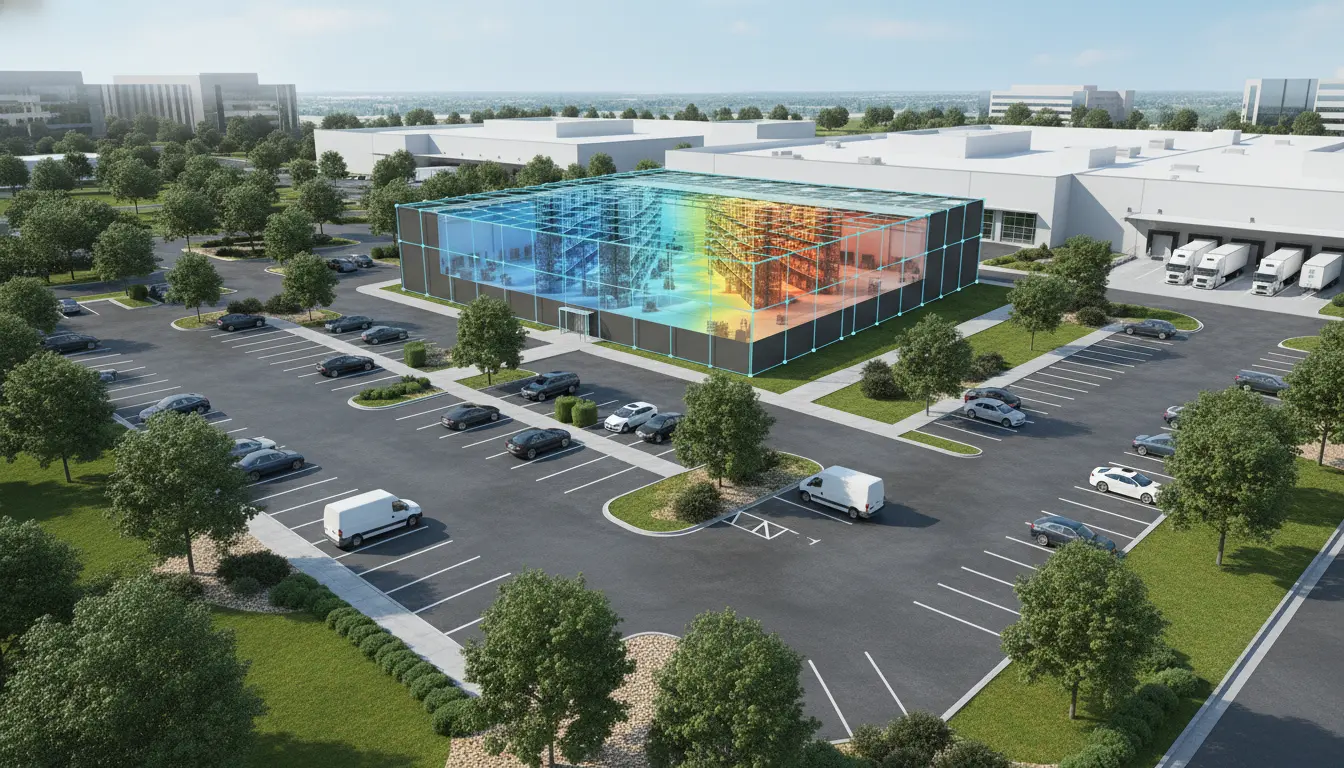
Validate Your Storage. Eliminate Thermal Blind Spots. Ensure Global GDP Compliance.
The Challenge of Large-Scale Thermal Stability
A warehouse isn’t just a building; it’s a complex thermal environment. Seasonal shifts, roof solar loading, HVAC cycling, and open loading docks create invisible “Micro-Climates” that can put your pharmaceutical inventory at risk.
Warehouse Temperature Mapping is a mandatory requirement for any facility storing medicinal products. We provide the high-density sensor grids and expert analysis needed to prove your entire facility – from floor to ceiling – maintains the required Controlled Room Temperature (CRT) or Cold Chain environment.
Why Warehouse Mapping is a Regulatory Mandate
✓ Compliance with USP <1079> & GDP Standards
Global health authorities (FDA, EMA, MHRA) require documented evidence that your storage facility is “in control.” A mapping study is the only way to satisfy auditors that your temperature data represents the entire storage area, not just a few convenient wall-mounted sensors.
✓ Identifying Vertical & Horizontal Gradients
Heat rises. In high-bay racking, the temperature at the top pallet position can be 5°C to 10°C warmer than the ground floor.
The Advantage: Mapping identifies these vertical gradients, allowing you to establish “No-Store Zones”, adjust HVAC set-points, introduce air circulating fans, or other measures to protect sensitive stock.
✓ Seasonal Validation (Summer vs. Winter)
A facility that passes in February may fail in August. We provide seasonal mapping protocols to document how your facility handles extreme external weather conditions and peak HVAC loads.
Our Mapping Methodology: Precision at Scale
| Step | Action | Outcome |
|---|---|---|
| 1. Site Audit | We analyze CAD drawings, HVAC placement, and racking height. | A custom sensor-placement protocol. |
| 2. Deployment | Wireless sensors are mapped in a 3D grid (Floor, Mid, Ceiling). | High-density data capture (usually 1-7 days). |
| 3. Stress Testing | Monitoring during door-open events and high-traffic shifts. | Proof of stability during operational peaks. |
| 4. Analysis | Calculation of Mean Kinetic Temperature (MKT). | Statistical validation of shelf-life impact. |
| 5. The Report | Comprehensive 3D heatmap and validation certificate. | Audit-ready proof of compliance. |
Engineered for Industrial Infrastructure
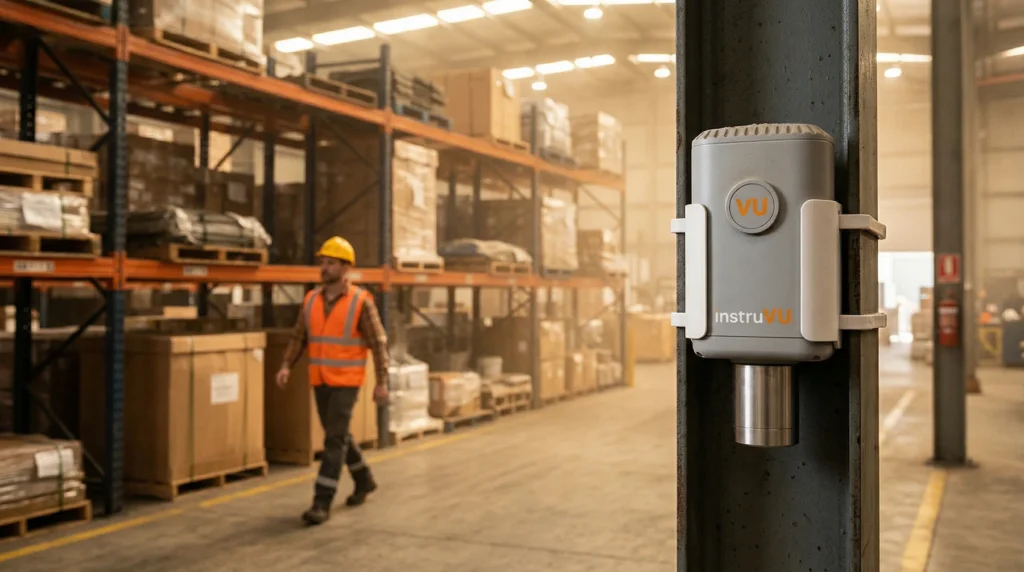
- Long-Range LoRaWAN® Hubs: Our mapping sensors transmit wireless even through massive steel racking and concrete pillars, allowing for real-time data capture in-situ.
- NIST-Traceable Accuracy: Every sensor used in the study is calibrated to NIST Traceable standards, ensuring that data is defensible.
- Rapid Deployment: No wiring required. Easy to mount wireless sensors make rapid installation possible. Installing a mapping sensor takes less than a minute.
- Comprehensive Reporting: We provide the full OQ/PQ (Operational/Performance Qualification) package required by quality departments.
Warehouse Mapping FAQ
Q: How many sensors do I need for my warehouse?
A: This is determined by a risk assessment. Factors include the total square footage, ceiling height, and the number of HVAC units. Typically, sensors are placed at the corners and centers of the racking at multiple heights.
Q: Do I need to stop operations during the study?
A: No. In fact, regulatory bodies prefer “In-Use” mapping, as it documents how the facility performs during actual forklift activity, foot traffic, and door openings.
Q: What happens if the study finds a “Hot Spot”?
A: We provide actionable recommendations. This might include installing high-volume fans, adjusting HVAC diffusers, or designating specific racks for non-sensitive materials.
