




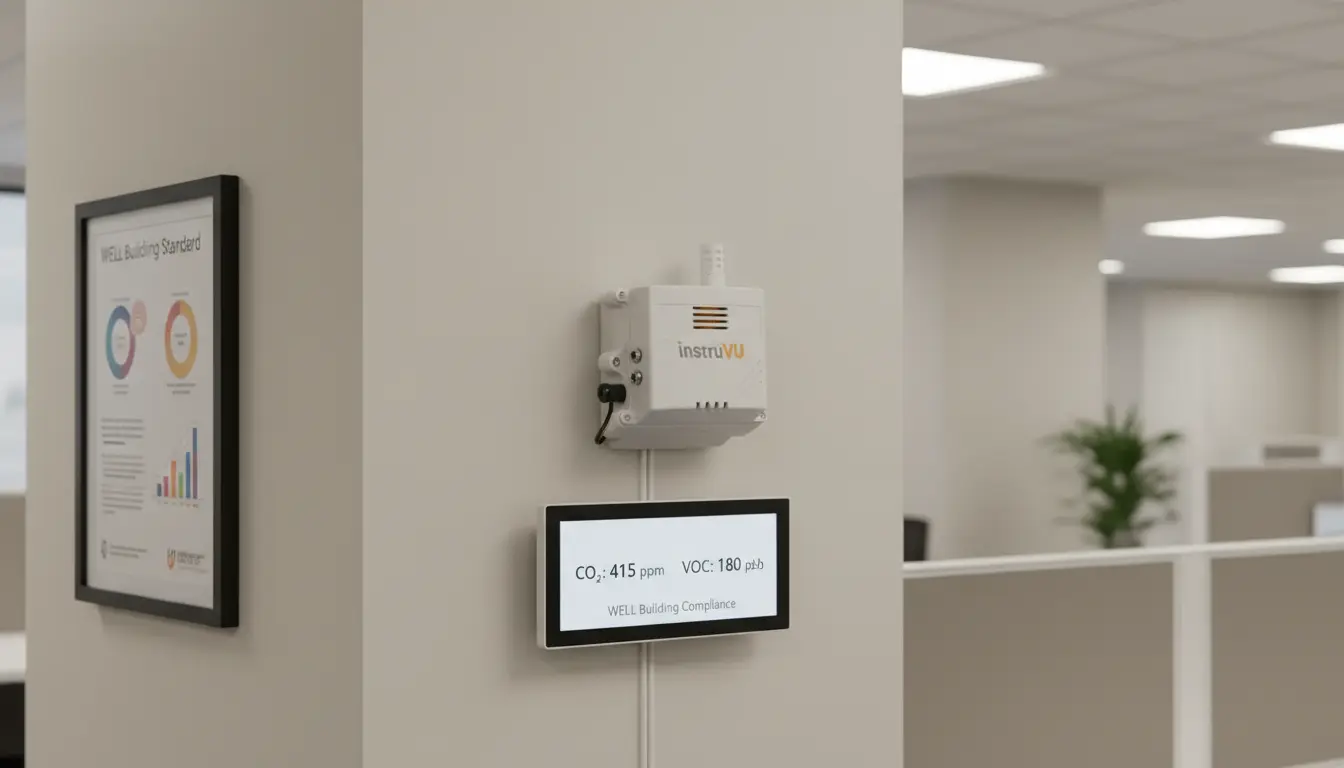
Optimize Health, Performance, and Energy Efficiency with Smart IAQ Intelligence.
The Invisible Impact of Poor Air Quality
We spend 90% of our lives indoors, yet indoor air can be 2 to 5 times more polluted than outdoor air. High levels of Carbon Dioxide (CO₂), Volatile Organic Compounds (VOCs), and Particulate Matter (PM₂.₅) don’t just affect comfort – they are linked to “Sick Building Syndrome,” reduced cognitive function, and the spread of airborne pathogens.
Our Automated IAQ Monitoring System provides a continuous window into the air you breathe, allowing your HVAC system to respond dynamically to occupancy and pollutant spikes.
Critical Parameters We Track
✓ Carbon Dioxide (CO₂) & Ventilation
CO₂ is the primary proxy for ventilation. High levels (above 1,000 ppm) cause drowsiness, headaches, and a 15% decrease in cognitive scores.
Smart Ventilation: Integrate with your BMS to increase fresh air intake only when CO₂ levels rise, saving energy during low-occupancy hours.
✓ Volatile Organic Compounds (VOCs)
VOCs are “off-gassed” by cleaning chemicals, furniture, and office equipment. Chronic exposure can cause respiratory irritation and long-term health issues.
✓ Particulate Matter (PM₂.₅ & PM₁₀)
Microscopic dust, pollen, and smoke particles that penetrate deep into the lungs. Our sensors ensure your filtration system is effectively removing these hazards.
✓ Humidity & Temperature
Dry air (below 30%) increases the survival of viruses, while high humidity (above 60%) promotes mold growth. We help you find the “Health Setpoint.”
The ROI of Clean Air
| Benefit | The Data Advantage |
|---|---|
| Cognitive Performance | Studies show a doubling of test scores in well-ventilated spaces. |
| Health & Absenteeism | Optimized IAQ reduces sick days by up to 35%. |
| Energy Savings | Demand-Controlled Ventilation (DCV) reduces HVAC costs by 20%. |
| Certification | Automatically gather data for WELL, LEED, and RESET credits. |
Why Choose Our Wireless IAQ Technology?
1. High-Precision NDIR CO₂ Sensors
We use Non-Dispersive Infrared (NDIR) sensors with Automatic Baseline Calibration (ABC). Unlike cheap sensors that “drift” over time, our hardware stays accurate for years without manual intervention.
2. Wireless LoRaWAN® Simplicity
Don’t worry about IT security or Wi-Fi dead zones. Our sensors operate on a dedicated long-range frequency that penetrates walls and covers entire campuses with a single gateway.
- 10-Year Battery Life: Discreet, wall-mounted sensors that require zero wiring.
3. Public Safety Dashboards
Increase occupant confidence by displaying real-time “Air Health” scores on tablets or digital signage in lobbies, classrooms, and conference rooms.
IAQ Monitoring FAQ
Q: Where is the best place to mount CO₂ sensors?
A: Sensors should be mounted at “breathing height” (approx. 3–6 feet from the floor) and away from open windows or direct air supply vents to get an accurate reading of the room’s actual air quality.
Q: Can this help with COVID-19 and flu prevention?
A: While sensors don’t detect viruses, high CO₂ levels indicate poor ventilation and a higher concentration of exhaled breath, which increases the risk of airborne transmission. Managing CO₂ is a primary recommendation from ASHRAE for infection control.
Q: Does the system integrate with my current HVAC?
A: Yes. We offer BACnet and API integrations that allow your HVAC system to automatically adjust dampers based on the live CO₂ data our sensors provide.
