




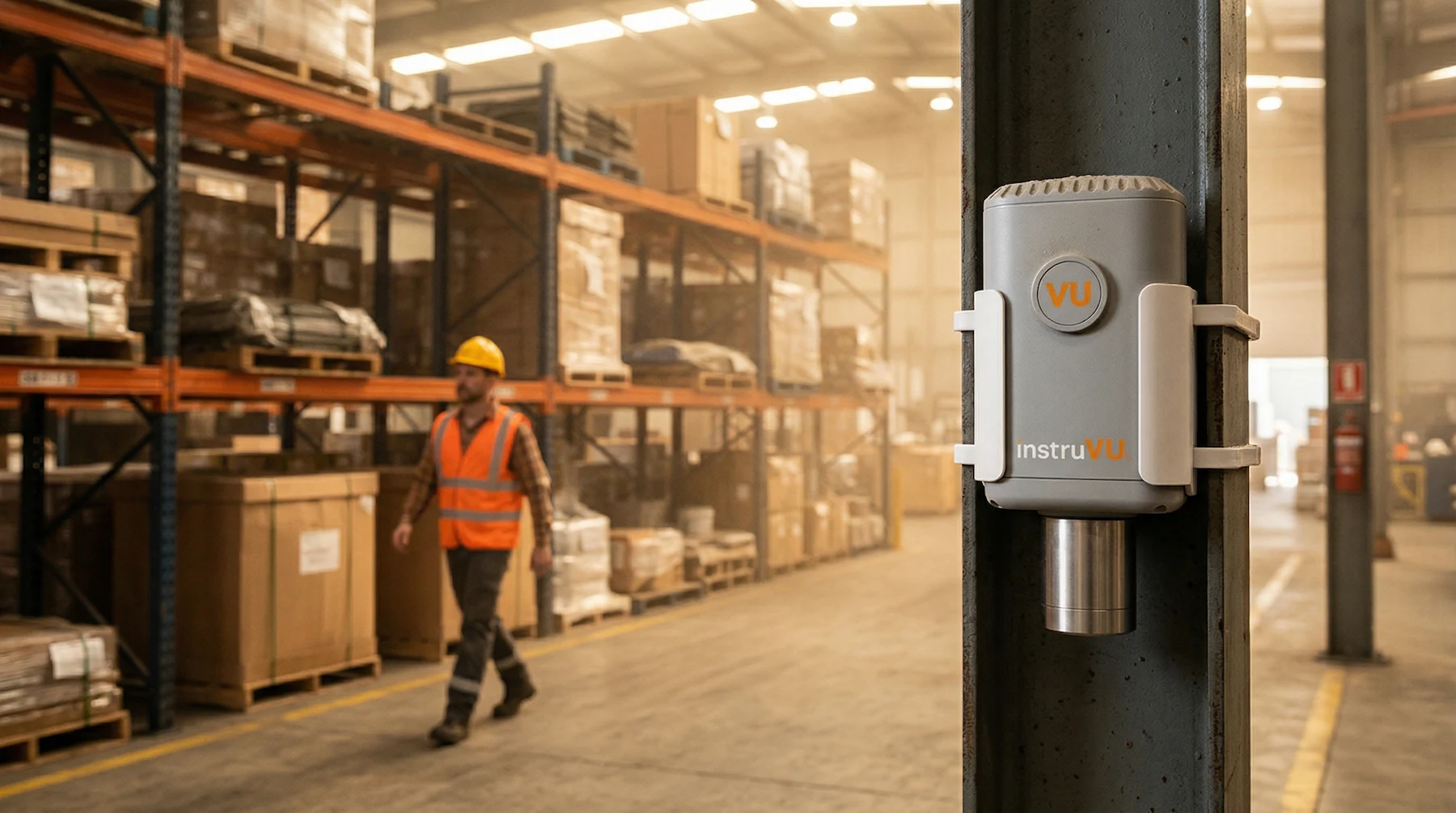
Automated Heat Stress Monitoring: Real-Time Protection for Your Workforce
Stop Manual Spot-Checks. Start Proactive Prevention with 24/7 Thermal Oversight.
The Risk: When the “Real Feel” Becomes Dangerous
In warehouses, boiler rooms, and industrial kitchens, air temperature is only half the story. High humidity prevents sweat from evaporating, causing the body to overheat rapidly. Manual checks are often performed too late – after a worker is already showing signs of exhaustion.
Our Smart Heat Stress Monitoring System provides a continuous safety net. By tracking the exact combination of heat and humidity, we provide real-time alerts so you can implement cooling breaks before a safety incident occurs.
Full-Spectrum Heat Safety Monitoring
Our system provides a centralized dashboard for the three variables that dictate worker safety and equipment performance:
- Ambient Temperature: Precision tracking of high-heat zones near machinery or outdoors.
- Humidity Monitoring: Critical for calculating “Heat Index” and assessing the body’s ability to cool itself.
- Airflow & Ventilation: Monitoring the efficiency of HVAC and exhaust fans to ensure your cooling infrastructure is actually working.
Why Safety Directors are Moving to Automated IoT
- ✔ Total OSHA Compliance & Documentation
OSHA’s General Duty Clause requires employers to provide a workplace free from recognized heat hazards. Our system automates your safety logs, providing a permanent, digital record of environmental conditions to prove compliance during any inspection. - ✔ Instant “Danger Zone” Alerts
Risk changes throughout the day. If a warehouse bay or production line crosses your defined safety threshold, the system sends instant alerts via SMS, Email, or Voice. Supervisors can respond in real-time by rotating staff or increasing hydration breaks. - ✔ Wireless LoRaWAN Connectivity (Better than Wi-Fi)
Our sensors don’t rely on your corporate Wi-Fi. They use high-penetration LoRaWAN technology to send data through heavy steel and over long distances with a 10-year battery life.- Security Advantage: Physically isolated from your IT network for maximum cybersecurity.
- Reliability: Signal penetrates where Wi-Fi fails.
- ✔ Predictive Maintenance for Cooling Systems
In addition to monitoring staff safety, our sensors track the health of your cooling assets. By monitoring the vibration and power draw of your AC units and exhaust fans, we can predict a mechanical failure before the temperature spikes.
Heat Safety Roadmap: Reactive vs. Proactive
| Feature | Traditional Manual Checks | Our Predictive IoT System |
|---|---|---|
| Data Collection | Manual “spot-checks” every few hours. | Continuous 24/7 automated logging. |
| Alerting | Verbal warnings; often too late. | Instant Multi-channel digital alerts. |
| Accuracy | Subjective; prone to human error. | NIST-traceable precision sensors. |
| Audit Trail | Paper logs; difficult to organize. | Audit-ready digital reports in one click. |
| Asset Health | No insight into HVAC performance. | Predicts failure of fans and AC motors. |
Modernize Your Safety Program Today
The Architecture of a Safe Workplace
- Industrial Sensors: Rugged, moisture-resistant devices that stand up to steam and dust.
- Secure Gateway: Connects hundreds of sensors to the cloud without using your Wi-Fi.
- Safety Dashboard: View heat levels across multiple facilities on a single screen.
Heat Stress FAQ
Q: How often should we monitor for heat stress?
A: In high-heat environments, conditions can change in minutes. Automated systems monitor every 1 to 15 minutes, ensuring that sudden spikes (like a steam leak or HVAC failure) are detected instantly.
Q: Can these sensors be used outdoors?
A: Yes. We offer IP65 and IP67-rated weather-proof enclosures designed for construction sites, loading docks, and outdoor industrial yards.
Q: Is it difficult to install?
A: No. Our sensors are “peel-and-stick” wireless devices. There is no wiring required, and the system can be live across your entire facility in less than a day.
